Enhancing Performance in Turbulent Pipe Flows with Shallow Dimples |
| 8 April 2026, Wednesday, 2:00pm to 2:30pm | Speaker: Mr. Timothy Wu, PhD Student, Mechanical Engineering, NUS |
| Venue: Seminar Room 8D-1, Level 8, Temasek Laboratories | Event Organiser Host: Dr. Tay Wee Beng |
ABSTRACT |
Pipe flows underpin a wide range of engineering systems, the performance of which are primarily contingent on the heat transfer efficiency and pumping power required at a given flow rate. Dimples, in particular, have received considerable attention because they have been shown to be able to enhance heat transfer significantly whilst only incurring a relatively small drag increase penalty. In the present work, the effect of shallow dimples on thermo-aerodynamic performance in fully developed turbulent pipe flow is investigated using Large Eddy Simulation. The findings demonstrate that shallow dimples are able to reduce the pumping power required at a given flow rate whilst producing a modest improvement in heat transfer. Furthermore, the effect of particular dimple geometric parameters - namely, dimple diameter and shape - on flow topology and performance are explicated. |
| ABOUT THE SPEAKER |
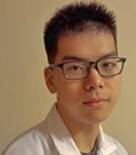 Mr Wu received his B.Eng. in Mechanical Engineering from the National University of Singapore (NUS) in 2024, where he is currently pursuing his PhD. His research focuses on passive flow control in turbulent internal flows. Mr Wu received his B.Eng. in Mechanical Engineering from the National University of Singapore (NUS) in 2024, where he is currently pursuing his PhD. His research focuses on passive flow control in turbulent internal flows.
|

Learning-Based IMU Correction for UAV Localization in GPS-Denied Environments |
| 8 April 2026, Wednesday, 2:30pm to 3:00pm | Speaker: Mr. Souvik Datta, MSc Student, Electrical Engineering, NUS |
| Venue: Seminar Room 8D-1, Level 8, Temasek Laboratories | Event Organiser Host: Dr. Tay Wee Beng |
ABSTRACT |
Reliable localization is essential for stable UAV flight. However, systems that depend on GPS, cameras, or LiDAR can struggle in cluttered, low-light, or signal-poor environments. In this work, we present a learning-based approach using AirIMU, which relies only on IMU data. The model learns to correct sensor noise and estimate uncertainty through end-to-end training. We evaluate its performance on the EuRoC dataset and integrate it with the PX4 flight controller to enable real-time improvements in state estimation. This approach aims to improve UAV performance in environments where traditional sensing methods are unreliable. |
| ABOUT THE SPEAKER |
 Souvik is currently a Master’s student in Electrical Engineering at the National University of Singapore. Souvik is currently a Master’s student in Electrical Engineering at the National University of Singapore.
|