
Laser-based Diagnostics for Electric Field and Species Concentration Measurements for Gas Discharges and Combustion Applications |
| 7 October 2022, Friday, 10:30 - 11:00am | Speaker: Dr. Chng Tat Loon, Department of Mechanical Engineering, NUS |
| Venue: Seminar Room 8D-1, Level 8, Temasek Laboratories | Event Organiser Host: Dr. Chin Yao Wei |
ABSTRACT |
Laser-based measurement methods have found widespread applicability due to their excellent resolution in both time and space, as well as their ability to remain non-intrusive. More recently, the development of coherent methods has gained traction given their potential for enhanced detection sensitivity and range. In this talk, I will present work on two such methods for the measurement of electric field strengths and chemical species concentrations, two quantities of decisive importance in plasmas, combustion, as well as plasma-assisted combustion. Electric field induced second harmonic generation, or E-FISH, is a nonlinear optical phenomenon which has traditionally been utilized for quantifying nonlinear susceptibilities and characterizing optical field distributions of laser beams. More recently, it has been repurposed as a versatile and sensitive tool for probing electric fields in plasmas. Electric field measurements in the ionization wave phase of several discharges will be discussed, along with some recent developments to extend the applicability of E-FISH, and strategies to address existing limitations. Radar resonance enhanced multi-photon ionization (REMPI) is a hybrid method which combines the high detection selectivity of laser-based REMPI spectroscopy with the high sensitivity of microwave (radar) scattering for trace species detection. In practice, sub-ppm levels of concentration have been demonstrated under atmospheric conditions. Application examples at both ambient conditions and in a flame will be presented. |
| ABOUT THE SPEAKER |
|


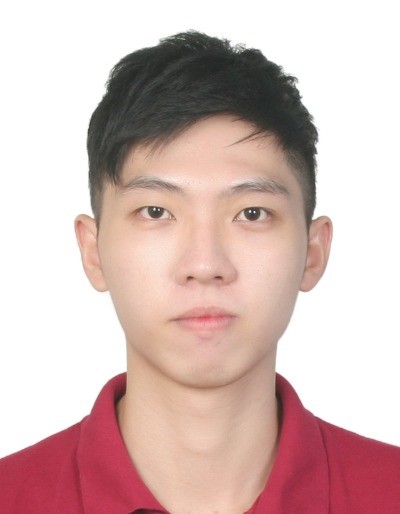
 Dr Chng Tat Loon is an assistant professor in the Mechanical Engineering department of CDE. Prior to joining NUS, he was a postdoctoral associate at the Laboratory of Plasma Physics in Ecole Polytechnique, France. He received both his B.Eng and M.Eng degrees from the Department of Mechanical Engineering at the National University of Singapore (NUS), before obtaining his Ph.D from the Department of Mechanical and Aerospace Engineering at Princeton University, USA. Before pursuing his Ph.D, Dr. Chng worked for several years as an associate research scientist at Temasek Laboratories, NUS, on a range of fluid mechanics problems, with the goal of transitioning these technologies to the defense industry. His research interests include non-equilibrium plasma technologies, development of advanced laser-based diagnostics for non-intrusive, standoff detection, and flow control aerodynamics, with specific application areas in aerospace and sustainable energy.