Three-Dimensional Numerical Investigation of a Disk-Type Pressure Gain Combustor and Comparison with Experiments |
| 14 October 2026, Wednesday, 2:00pm to 2:30pm | Speaker: Mr. Takumi Ito, PhD Candidate, Department of Mechanical and Intelligent Systems Engineering, Kyushu Institute of Technology, Japan |
| Venue: Seminar Room 8D-1, Level 8, Temasek Laboratories | Event Organiser Host: Dr. Sai Sudha Ramesh |
|
ABSTRACT |
Disk-type pressure gain combustors (DPGCs), including disk-type rotating detonation combustors (DRDCs), are a promising technology for improving the efficiency of propulsion and power generation systems through pressure gain combustion. Due to the complex three-dimensional flow and combustion phenomena occurring inside DRDCs, numerical analysis is an important tool for understanding their operating characteristics. In this presentation, three-dimensional computational fluid dynamics (CFD) of a DRDC will be presented. The numerical model was constructed based on an experimental combustor with a multi-point fuel injection system. The simulations were used to investigate the internal flow field, combustion behavior, the effects of the number of injection ports, and total pressure gain characteristics inside the combustor. Ongoing simulations are being compared with experimental measurements obtained at the National University of Singapore (NUS) to evaluate the capability of the CFD approach to reproduce the observed combustion and flow characteristics. Particular attention will be given to the relationship between the internal flow structure, detonation wave behaviour, and pressure gain. This comparison will help to identify the gaps and their sources between CFD and experiments. |
| ABOUT THE SPEAKER |
|

Discharge Modes and Energy Coupling in Microwave-Enhanced Ignition |
| 14 October 2026, Wednesday, 2:30pm to 3:00pm | Speaker: Dr. Huimin Wu, Research Fellow, National University of Singapore |
| Venue: Seminar Room 8D-1, Level 8, Temasek Laboratories | Event Organiser Host: Dr. Sai Sudha Ramesh |
|
ABSTRACT |
Microwave-enhanced ignition is a promising approach for improving ignition performance and extending the operating limits of lean-burn combustion systems. This talk presents an experimental investigation of the discharge modes and energy-coupling mechanisms involved in microwave-enhanced ignition. Particular attention is given to the transition from glow to arc discharge, its influence on energy deposition, and the ignition kernel formation. The results provide insights into the interaction between microwave energy and microwave plasma, as well as its effects on flame initiation and early flame propagation. These findings may contribute to the development of more reliable and efficient microwave-enhanced ignition systems. |
| ABOUT THE SPEAKER |
|
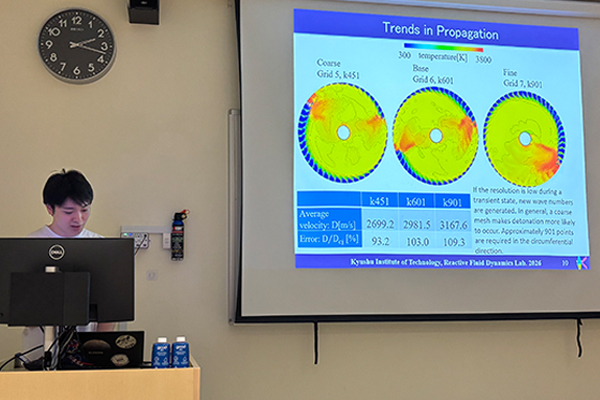
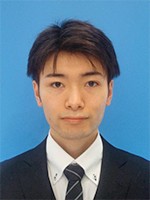 Mr. Takumi Ito is a PhD candidate in the Department of Mechanical and Intelligent Systems Engineering at Kyushu Institute of Technology, Japan. His research focuses on numerical investigations of rotating detonation engines and pressure gain combustion using three-dimensional computational fluid dynamics. His current research interests include detonation propagation, pressure gain, fuel injection, combustion modes, and the interaction between detonation waves and turbomachinery. He has also been involved in research on disk-type rotating detonation engines for power generation applications.
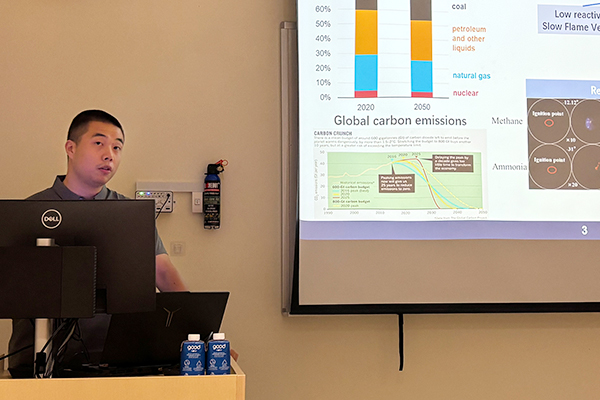
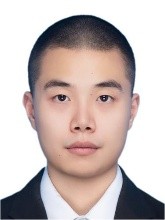 Dr. Huimin Wu received both his bachelor’s degree and PhD from Huazhong University of Science and Technology. His doctoral research focused on microwave-enhanced ignition. During his PhD studies, he spent one year as a visiting student at the National University of Singapore. After completing his PhD in 2026, he joined NUS as a Research Fellow. His current research focuses on laser diagnostics for reacting flows and plasma-assisted combustion.